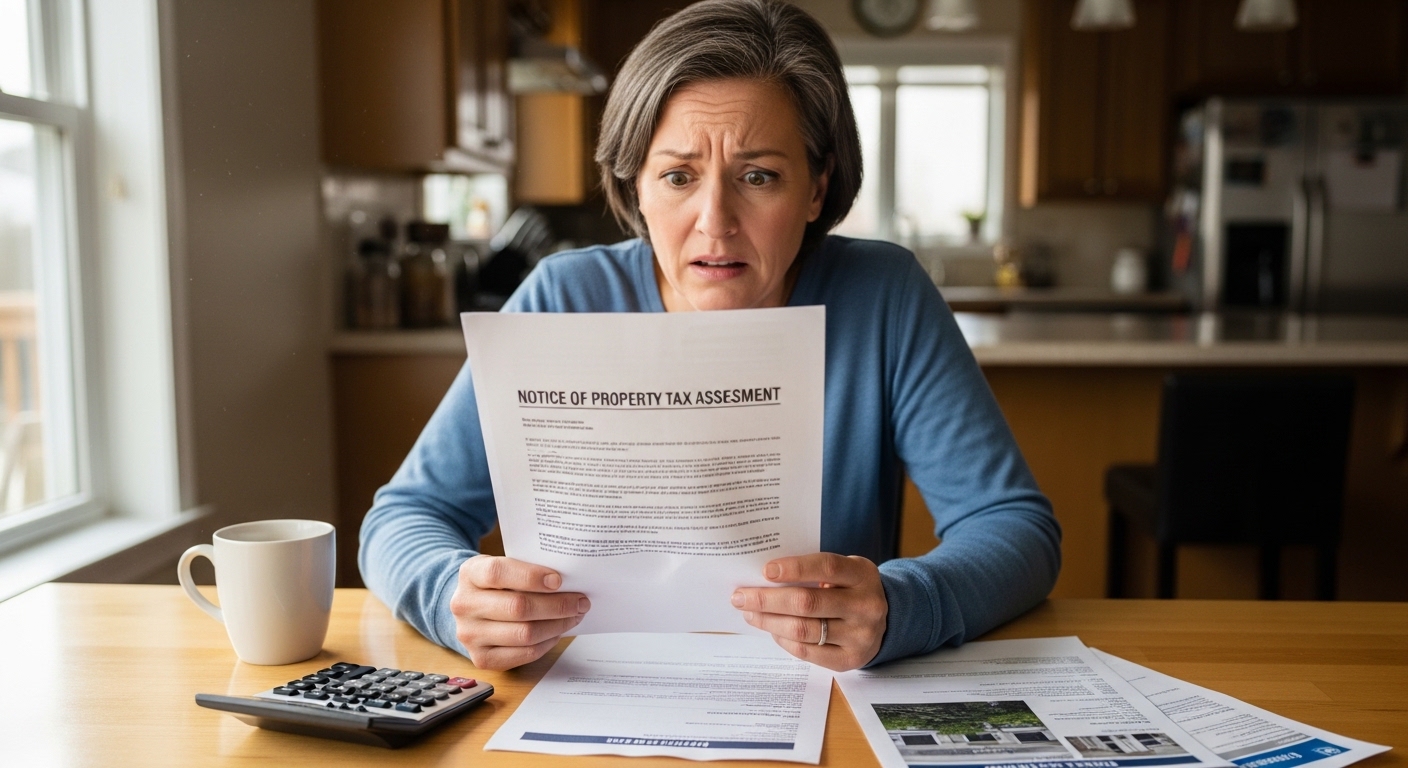
Your home is one of the biggest investments you'll make in your lifetime, and every decision about it matters. So when your property tax assessment comes in the mail—and especially when it's significantly higher than last year—it's worth taking a closer look. Many Springfield homeowners are seeing their assessments jump 20 to 30 percent or more, and they're accepting those increases as inevitable. But here's the truth: they don't have to be.
I see this happen all the time. A homeowner gets their assessment notice, sees the number, and thinks "Well, the market has been crazy, so this must be right." Then they move on, never realizing they had options. The unfortunate reality is that roughly 30 to 60 percent of properties are overassessed, yet 74 percent of U.S. homeowners have never appealed their assessment, and 57 percent didn't even know they could. That's a lot of people leaving money on the table.
Why Your Assessment Went Up (And Why It Might Be Wrong)
Let's start with the basics. Your home's assessed value and your tax rate are two different things. You're correct that tax rates—the percentage of your home's value you pay annually—are set by the state and your local municipality and aren't something you can negotiate. But your property's assessed value is another story entirely. In Missouri, appraisers in each county are responsible for valuing all property on January 1 of each year, and properties are appraised based primarily on fair market values.
That's where things can go sideways. Assessors use market data, comparable sales, and property characteristics to determine value, but that process isn't flawless. Sometimes properties are over-valued because the assessor relied on outdated information or didn't account for the actual condition of your home. Maybe comparable sales they used weren't truly comparable to yours. Maybe there was a data entry error in your property details. Or maybe market conditions have shifted since the assessment was completed.
The key word here is "fair market value." If your assessment doesn't reflect what an informed buyer would actually pay for your home, it's ripe for appeal.
Understanding Missouri's Appeal Process
If you live in Springfield or anywhere in Missouri, here's what you need to know: Missouri law requires that the county assessor reassess real estate every odd-numbered year (2021, 2023, 2025, etc.) for tax purposes, and the value based on real estate remains the same for the following even-numbered year. When you get your assessment notice, the clock starts ticking.
The appeal process in Missouri typically involves three stages. First, you can request an informal meeting with your county assessor's office. This is a low-pressure conversation where you discuss your assessment directly with an appraiser. You should gather and present evidence that supports your value, such as photographs, the recent sale of your property, or the oral testimony of someone who has done a recent appraisal of your property. Many cases get resolved right here without needing to go further.
If you're not satisfied after the informal meeting, the next step is appealing to your county's Board of Equalization. The deadline for filing an appeal with the Board of Equalization is the second Monday of July each year. For Greene County (where Springfield is located), this means you have a limited window from May through mid-July to take action. A hearing will be scheduled where the board will hear evidence from the assessor and any evidence you might have regarding the value of the property which is the subject of the appeal.
Finally, if you're still not satisfied, you can appeal to the Missouri State Tax Commission. You have the right to appeal to the State Tax Commission by September 30 or 30 days after the final action of the board of equalization, whichever is later.
What Evidence You'll Need
The most important thing to understand is this: evidence matters. The burden is on you to prove that your assessment is wrong, so the stronger your case, the better your chances of success. While 30 to 60 percent of U.S. residential properties are overassessed, homeowners who do appeal win reductions roughly 40 to 60 percent of the time. Those are good odds, but only if you come prepared.
The strongest evidence includes comparable sales from your area. Look for recent sales of homes similar to yours in Springfield—similar size, condition, location, and features. If you found comparable sales that sold for less than your assessed value, that's powerful evidence. You'll also want photographs showing any issues with your property: an aging roof, cracks in the foundation, outdated systems, poor condition. These tell the story of why your home may not be worth what the assessor says.
A recent professional appraisal, if you have one, is excellent evidence. So is your recent purchase contract or closing statement if you bought the home recently. Documentation of needed repairs or recent property tax errors found in the assessor's records can also strengthen your case.
Don't Miss the Deadline
Here's the harsh part: property tax appeal deadlines are the one part of the process where being right doesn't matter. You can have the strongest evidence, the clearest overassessment, and the most compelling comparable sales, and none of it matters if you file one day late. That's not an exaggeration. Courts treat these deadlines as absolute.
If you miss the Board of Equalization deadline in July, you're locked into your current assessment for another full year. That's a year of overpaying, and depending on your tax rate and assessment amount, that could cost you hundreds or even thousands of dollars.
My advice? The moment you receive your assessment notice in the spring, mark that July deadline on your calendar. Don't wait to see if you have time. Contact your county assessor's office right away and ask about scheduling an informal hearing. Get moving on gathering evidence. The sooner you start, the less rushed you'll feel.
Consider Getting Professional Help
You don't have to handle this alone. Many Springfield homeowners work with tax appeal professionals or attorneys who specialize in these cases. If your property is worth a significant amount and the assessment increase is substantial, it might be worth the investment. These professionals know the local market, understand how assessors in Greene County make their decisions, and know exactly what evidence carries the most weight.
However, you can also handle a straightforward appeal yourself, especially if you've got solid comparable sales data and clear evidence of overvaluation. The key is taking action and not assuming the assessment is correct.
One More Thing: Check Your Exemptions
Before you focus entirely on the assessment value, take a minute to verify that you're claiming every exemption you're entitled to. Sometimes the fastest way to reduce your tax bill isn't appealing the assessment—it's making sure you're taking advantage of homestead exemptions or other tax breaks your municipality offers.
The Bottom Line
Your property tax assessment is not set in stone. It's a number determined by a human process that, like all human processes, can have errors. If you believe your assessment is too high and doesn't reflect fair market value, you have the right and the ability to challenge it. In Springfield, with the right evidence and timely filing, a successful appeal doesn't just save you money this year—in most states, your reduced assessment stays in place until the next reassessment cycle, which can be anywhere from 1 to 10 years depending on where you live. That's real money over time.
If you want to learn more about your property's value in Springfield or need guidance on whether your assessment might be too high, I'm here to help. As a local real estate expert, I have deep knowledge of the Springfield market and can help you understand whether your assessed value makes sense in today's market. You can also search current market data on HOUSEJET to see what comparable homes in your area are actually selling for. That's often the best place to start when building your appeal case.
Don't accept your assessment without understanding your options. You've worked too hard for your home to overpay for it every single year.